Modernizing Customer Operations for Scale
How a healthcare organization reduced manual work, lowered projected technology costs, and built a more sustainable customer operations infrastructure.
Project Impact
$100K+
Projected annual cost savings
20%+
Reported reduction in manual work
End-to-End
Infrastructure design and platform implementation
Overview
A growing medical cost-sharing organization relied on a custom-built customer management system that had become increasingly complex and expensive to maintain.
Disconnected workflows, limited visibility into the sales pipeline, and reliance on specialized technical support created operational inefficiencies across the organization.
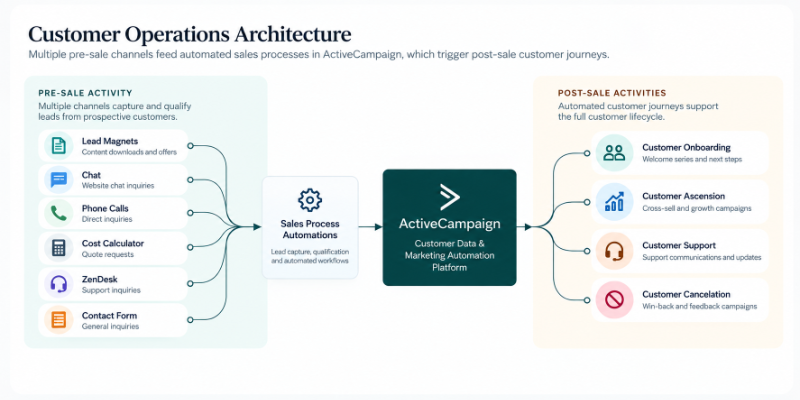
I designed and implemented a new customer operations infrastructure that connected critical business processes, improved visibility, and gave internal teams greater control over their systems.
The Challenge
The organization’s custom-built customer management platform had become expensive to maintain and increasingly difficult to support.
Fragmented customer information and disconnected workflows created inefficiencies across sales, customer service, and membership management. Teams lacked consistent visibility into customer progression and relied heavily on specialized technical support to maintain everyday operations.
The organization needed a connected, cost-effective infrastructure that simplified processes and could be managed more independently by internal teams.
My Approach
I began by evaluating the existing technology and workflows to understand how information moved through the organization and where processes could be simplified.
From there, I designed and implemented a new customer operations infrastructure focused on three capabilities:
1. Creating a connected customer data foundation
Designed the system architecture to bring customer information and business processes into a more manageable environment, reducing fragmentation and improving access to information.
2. Standardizing sales and customer workflows
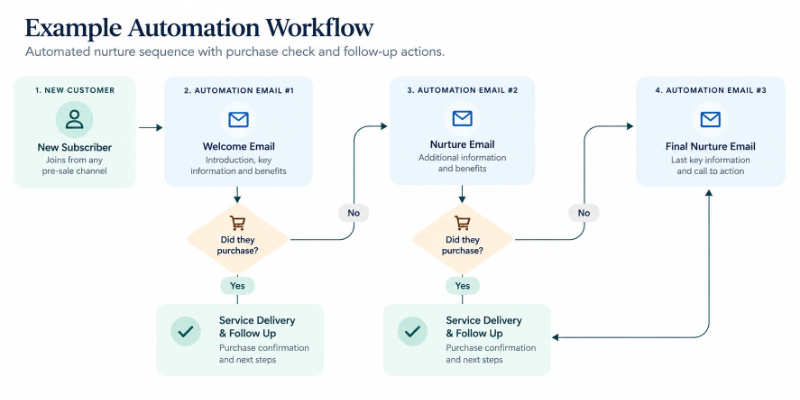
Built workflows to track customer progression, improve follow-up processes, and provide greater visibility into sales and membership activities.
3. Enabling sustainable operations
Implemented the platform with an emphasis on usability, maintainability, and internal ownership, reducing dependence on specialized external technical support.
The result was a more connected operating environment that supported everyday business activities while reducing unnecessary complexity.
Business Impact
The new infrastructure reduced operational complexity and established a more sustainable approach to managing customer relationships.
$100K+ in projected annual cost savings, calculated by comparing software and technical support costs for the legacy and replacement systems.
20%+ reduction in manual sales and marketing work, improving operational efficiency.
Improved sales pipeline visibility, making it easier to identify opportunities and manage follow-up activities.
Reduced reliance on specialized technical support, enabling internal teams to manage more of their day-to-day operations independently.
The result was a more connected customer operations environment, with improved process visibility, less manual work, and a lower projected cost of ownership.